


Deploying tech wears the mask of adoption. A smartwatch on someone’s wrist looks like it’s doing its job. Whether it’s doing it is a different question. The assumption rarely causes harm when presence is mistaken for performance.
But those assumptions can become expensive over time, especially when it comes to HR tech. Many companies still say, “We bought the tool, but nothing actually changed.”
That is because for many teams, deploying new technology feels like the finish line. In reality, it’s just the beginning. The real challenge is whether technology becomes part of the workflow and delivers the outcome it promised.
In 2026, companies are no longer treating deployment as a setup task, but as an ROI strategy. The small details before and after buying a tool often look optional. They are not.
Those decisions shape whether your hiring tech becomes part of the workflow or another tool your team uses for 10 days. Deployment only ends when the foundation is in place, and the ROI starts showing up.
The framework itself is straightforward. Let us break down the difference.
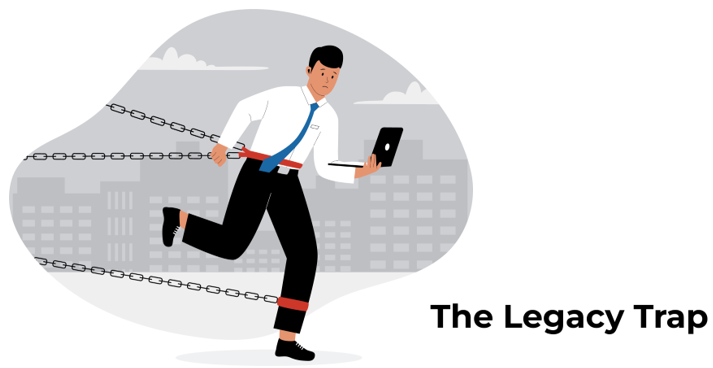
Phase 1: The Legacy Trap
Every new system comes with a hidden cost: expertise reset. Teams that have spent years mastering the old way of working suddenly have to learn a new language, new workflows, and new habits through a PPT guide.
A recruiter who has screened 10,000 candidates using the same logic knows what qualified talent looks like. Asking them to rely on a new automation feature instead of their own judgment naturally creates hesitation. The challenge is less about capability and more about trust. As a result, 50% of installed software remains unused, and 40% of features go untapped, limiting the ROI organizations expect from their technology investments.
How Successful Companies Overcome It:
Rather than fitting new technology into old workflows, a manufacturing company asked: “If we weren’t constrained by how we’ve always done this, what would screening logic look like?” They sat down with end-users, worked through the process step by step, and figured out what to keep, cut, or hand off to AI. Then they built workflows to support that new logic. Only then did they deploy the tool. It made the team go from “doing things better” to “doing better things.”
Phase 2 – The Iceberg Audit
An audit is simple but rarely followed by most organizations. They optimize for speed, cost, and capability while ignoring misalignment, one of the silent causes of hidden costs and issues. Organizations with thought-out HRM practices report 42% higher adoption rates and 28% higher ROI.
They follow a diagnostic process starting with these questions.
- What is broken about the current setup?
- What is it costing you in time, money, and lost talent?
- What happens if you do not fix this for another 6 months?
They map out what the process should look like if not constrained by legacy thinking and other factors to build the tool selection around that redesigned workflow. If they audit with the right questions in mind, the solution follows naturally.
Phase 3 – The AI Imperative
Over the next three years, 92% of companies plan to increase their AI investments. AI has become foundational, much like electricity a century ago. The advantage now comes from how effectively it is built into the way work is done. Technology design mismatch is common with the “new” HR tech when it is built on the logic of old HR technology. When AI is added onto existing software rather than built into it from the start, you’re introducing new capabilities into an architecture that wasn’t designed for them.
How it affects your systems:
- The workflow ignores the insights AI generates.
- Teams force intelligent tools into manual processes.
- Integrations struggle because the workflow wasn’t built for this level of intelligence.
This output leads to 73% of failed AI recruiting initiatives, and 56% of contact centers fail to realize expected AI ROI.
Organizations in the new era evaluate and choose software with AI-Native processes whose entire architecture assumes intelligence, not AI bolted on. A blue-collar organization replaced manual first-round interviews with BlueRise, an AI-native recruitment platform built to handle autonomous structured recruitment cycles from first call to onboarding.
Using BlueRise reduced screening time from 3 weeks to a few days per week across the organization’s entire talent pool. Companies choose similar technology that was built in recent years with AI integrated across features that is not limited to a chatbot.
Phase 4 – The IKEA Effect
People are far more likely to adopt a system when they help shape it around their day-to-day challenges, workflows, and needs, making it feel less like a new tool and more like a solution to a problem they already understand.
The challenge is that organizational structure is often invisible. People experience its effects every day, but they rarely see the systems behind them. A recruiter can’t change approval processes on their own, and a hiring manager can’t redesign workflows by themselves. Even when people want to change, the structure around them often determines what they can and cannot do.
Industrial data shows that 54% of failed AI projects created more work due to poor workflow integration, and 78% of organizations spent less than 10% of their AI budget on change management.
One logistics company didn’t treat adoption as an afterthought. They involved recruiters early, appointed internal champions, measured adoption after launch, and adjusted along the way. Instead of preserving the existing structure, they designed the rollout around the people expected to use it.
Software doesn’t create ROI, only Adoption does. Your new screening platform may be live, but that doesn’t mean your organization has changed. The companies that see results don’t stop at deployment. They redesign behavior, workflows, and decision-making through these 4 phases to determine whether AI becomes part of how your team works or just a toolbar icon nobody clicks.